
Shop the Perimeter: How Outer-Aisle Shopping Can Transform Your Health
Have you ever paid attention to how your local supermarket is laid out?
It turns out grocery stores aren't organized by accident. They are intentionally designed around refrigeration, plumbing, and delivery docks—which means almost all the fresh, nutrient-dense, single-ingredient foods live around the outer perimeter of the store.
Meanwhile, those long, brightly lit center aisles are packed to the brim with shelf-stable snacks, boxed dinners, and sugary drinks engineered to last for months (or years!) without spoiling.
If you want to effortlessly upgrade your diet, boost your energy, and ditch hidden additives, the single best habit you can build is "shopping the perimeter." Here is how sticking to the outer edges works, what to look for in each section, and how to balance your cart for long-term health.
The 80/20 Rule for Your Grocery Cart
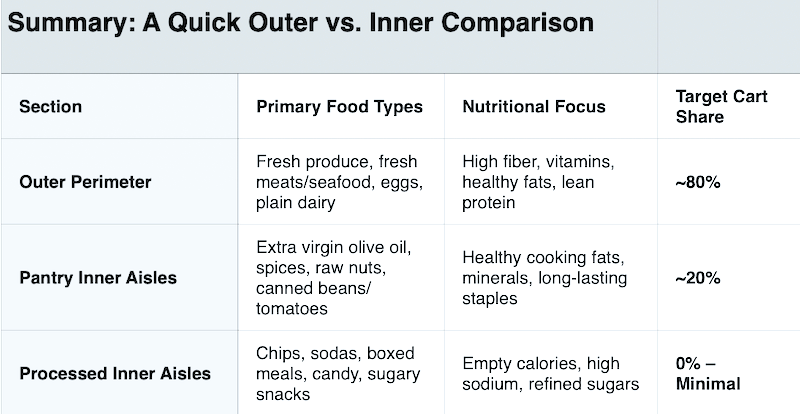
You don't need to completely ban the middle aisles—that’s where essentials like olive oil, spices, and dried beans live! However, aim for a simple visual balance when you check out:
80% Outer Aisles: Fresh produce, quality meats and seafood, eggs, and minimal-ingredient dairy.
20% Inner Aisles: Cooking oils, raw nuts, seeds, canned legumes, spices, and occasional pantry staples.
When your cart is 80% whole foods, you automatically crowd out refined sugars, excess sodium, industrial seed oils, and artificial preservatives without having to count every calorie.
A Guided Tour of the Outer Perimeter
1. The Produce Section: Your Color & Fiber Powerhouse
This is usually the first area you see when walking in. It’s packed with crisp greens, vibrant berries, roots, and citrus—foods rich in vitamins, minerals, anti-inflammatory antioxidants, and dietary fiber.
What to grab: Leafy greens (spinach, kale), cruciferous veggies (broccoli, cauliflower), avocados, sweet potatoes, garlic, and fresh berries.
Why it matters: Fiber feeds your gut microbiome, keeps digestion smooth, and prevents rapid blood sugar spikes.
2. Meat, Poultry & Fish: High-Quality Protein & Essential Fats
Moving further along the edge brings you to fresh protein sources. Protein is critical for repairing tissue, preserving lean muscle mass, and keeping you full between meals.
What to grab: Wild-caught salmon or cod, pasture-raised eggs, grass-fed beef, organic chicken breast, and turkey.
Why it matters: Whole protein sources provide complete amino acid profiles and essential omega-3 fatty acids without the heavy sodium nitrites and fillers found in processed deli meats.
3. Butter & Dairy: Whole-Food Fats & Probiotics
In the back corner, you’ll find cold storage for dairy and dairy alternatives.
What to grab: Grass-fed butter or ghee, plain Greek yogurt, kefir, cottage cheese, and unsweetened almond or coconut milk.
Why it matters: Fermented dairy like Greek yogurt and kefir delivers live probiotic cultures to support gut health, while grass-fed butter offers fat-soluble vitamins like A, D, and K2.
What’s Hiding in the Middle Aisles?
The middle aisles are dominated by ultra-processed foods—items manufactured using industrial extractions, chemical preservatives, artificial colorings, and refined emulsifiers.
While they offer convenience and a long shelf life, these products are specifically engineered to hit your brain’s "bliss point"—a precise combination of sugar, salt, and fat that makes them hard to stop eating.
Common pitfalls in the center aisles include:
Added Sugars: Hidden under names like high-fructose corn syrup, maltodextrin, and cane juice in sauces and cereals.
Refined Grains: White flour products stripped of their natural fiber and bran layer.
Emulsifiers & Preservatives: Additives designed to extend shelf-life that can irritate the intestinal lining.
Ready to Take Control of Your Health Journey?
Navigating nutritional choices, metabolic health, and weight management can feel overwhelming—but you don't have to do it alone!
The team at Functional Health & Weight Loss of Lake Nona specializes in customized health plans tailored to your unique body, lifestyle, and goals.
Click Here to Claim Your Free, No-Obligation Consultation Today!
References
Hall, K. D., et al. (2019). Ultra-processed diets cause excess calorie intake and weight gain: An inpatient randomized controlled trial of ad libitum food intake. Cell Metabolism, 30(1), 67–77.
Monteiro, C. A., et al. (2019). Ultra-processed foods: what they are and how to identify them. Public Health Nutrition, 22(5), 936–941.
Mozaffarian, D. (2016). Dietary and policy priorities for cardiovascular disease, diabetes, and obesity: a comprehensive review. Circulation, 133(2), 187–225.