
Decoding Your Appetite Part 2:
Is It Real Hunger or Dehydration?
The Wires Crossed in Your Brain: Why Dehydration Feels Exactly Like Hunger
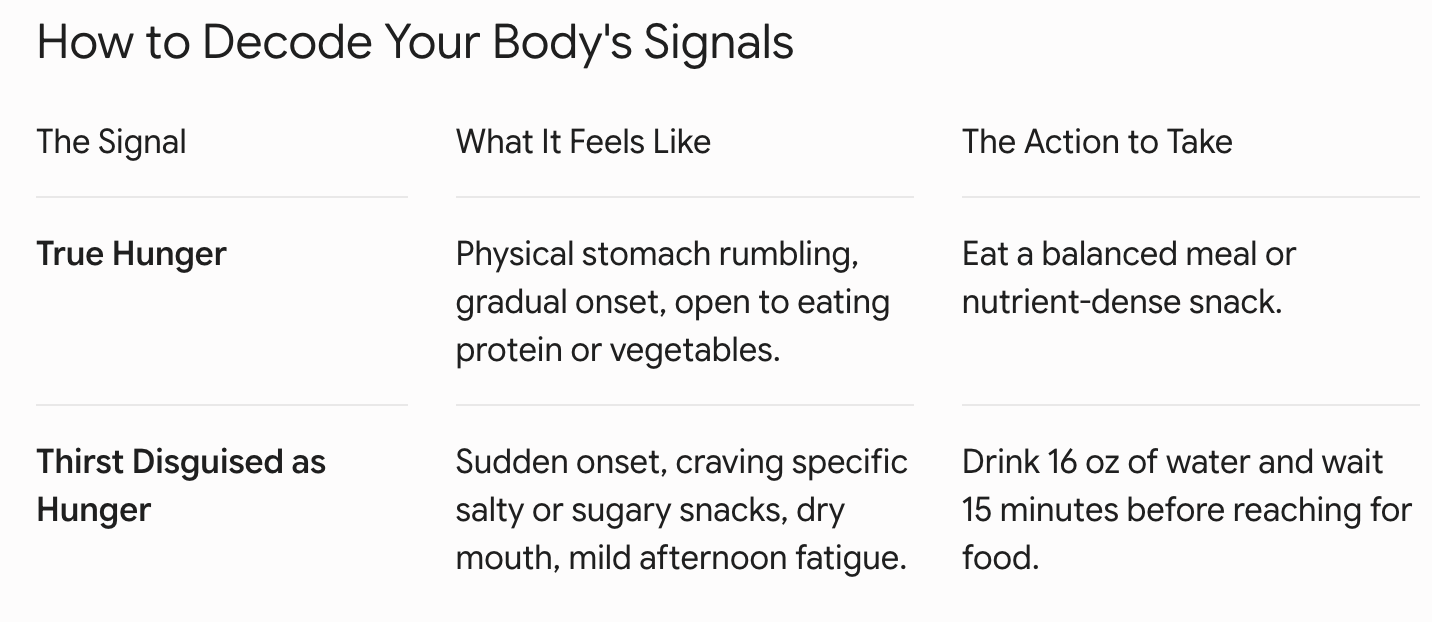
It is mid-afternoon, your energy is dipping, and suddenly your stomach feels empty. You reach for a snack, eat it, and yet—20 minutes later—that restless, unsatisfied feeling remains.
If this scenario sounds familiar, you aren't lacking willpower. You are likely just experiencing a biological mix-up. The human body is remarkably complex, but when it comes to signaling basic needs, its wiring can get surprisingly crossed.
1. The Shared Control Center: The Hypothalamus
At the center of this confusion is the hypothalamus, a small region located at the base of your brain. The hypothalamus acts as the control center for homeostatic functions—it regulates body temperature, sleep cycles, blood pressure, thirst, and hunger.
Because thirst and appetite signals originate from the same neural real estate, their physiological prompts feel almost identical:
A drop in physical energy
Mild fatigue or brain fog
An uncomfortable, hollow sensation in the midsection
When fluid levels drop, the hypothalamus triggers a generalized drive to seek intake. Unless you pay close attention, your brain defaults to interpreting this signal as a need for solid food rather than fluid.
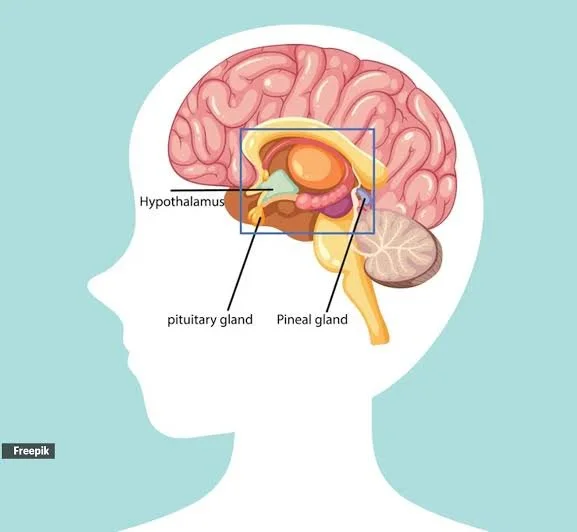
The hypothalamus regulates thirst and hunger
Source: The Indian Express
2. The Cellular Craving for Energy and Glycogen
Dehydration alters your physiology at a cellular level, compounding the sensation of hunger in two major ways:
Slowing Down Glycogen Breakdown: Your liver and muscles store carbohydrates as glycogen for quick energy. Converting glycogen into usable glucose requires water. When dehydrated, your liver struggles to break down glycogen smoothly, causing blood sugar levels to drop. Your brain senses this dip and immediately triggers cravings for fast-acting fuel—usually sugar or simple carbohydrates.
Cellular Energy Deficits: Water is essential for cellular respiration and ATP (energy) production. As cellular fluid drops, metabolic processes slow down. Your body interprets this sluggishness as a lack of caloric fuel, prompting you to eat when all your mitochondria really need is H₂O.
3. The Salt and Mineral Trap
When you sweat or go long periods without drinking fluids, your body loses both water and key electrolytes like sodium, potassium, and magnesium.
As electrolyte concentrations become unbalanced, the brain triggers appetite signals specifically aimed at savory, salty foods to replenish those missing minerals. You might find yourself intensely craving potato chips or pretzels when a high-electrolyte drink or a glass of water with a pinch of salt would completely resolve the urge.
Sources
McKinley, M. J., & Johnson, A. K. (2004). The physiological regulation of thirst and fluid intake. News in Physiological Sciences, 19(1), 1–6.
Popkin, B. M., D'Anci, K. E., & Rosenberg, I. H. (2010). Water, hydration, and health. Nutrition Reviews, 68(8), 439–458.
Betts, J. A., et al. (2012). The influence of hydration status on appetite regulation and energy intake. Sports Medicine, 42(7), 541–558.