
What Does Eating "Clean" Actually Mean? (Hint: It’s Not a Diet)
"Clean eating" is fundamentally about choosing whole, minimally processed foods that are as close to their natural state as possible.
While the term has taken over social media, it isn’t a strict medical diet; rather, it is a lifestyle philosophy centered around eating "real food". At its core, the practice encourages moving away from heavily manufactured items loaded with artificial additives, refined sugars, and chemical preservatives, shifting the focus toward nutrient-dense, ingredient-conscious choices.
Fascinating Facts About Clean Eating
It is actively reshaping grocery store shelves: Consumer demand for "cleaner" products is so high that major food manufacturers are actively reformulating long-standing products to remove artificial colors, dyes, and synthetic preservatives.
Social media drives the aesthetic, not always the nutrition: Research shows that highly popular "clean eating" posts on platforms like Instagram focus heavily on visual purity and idealization. However, nutritional audits of recipes on popular health blogs reveal that many "clean" recipes actually exceed recommended daily amounts of sodium, sugar, and saturated fat.
The "Perimeter" rule is king: Up to 40% of young adults adopt clean eating practices, which often starts with a single golden shopping rule: shop the outer edges of the grocery store. The perimeter is where fresh produce, meats, and dairy live, while the center aisles house heavily processed boxed goods.
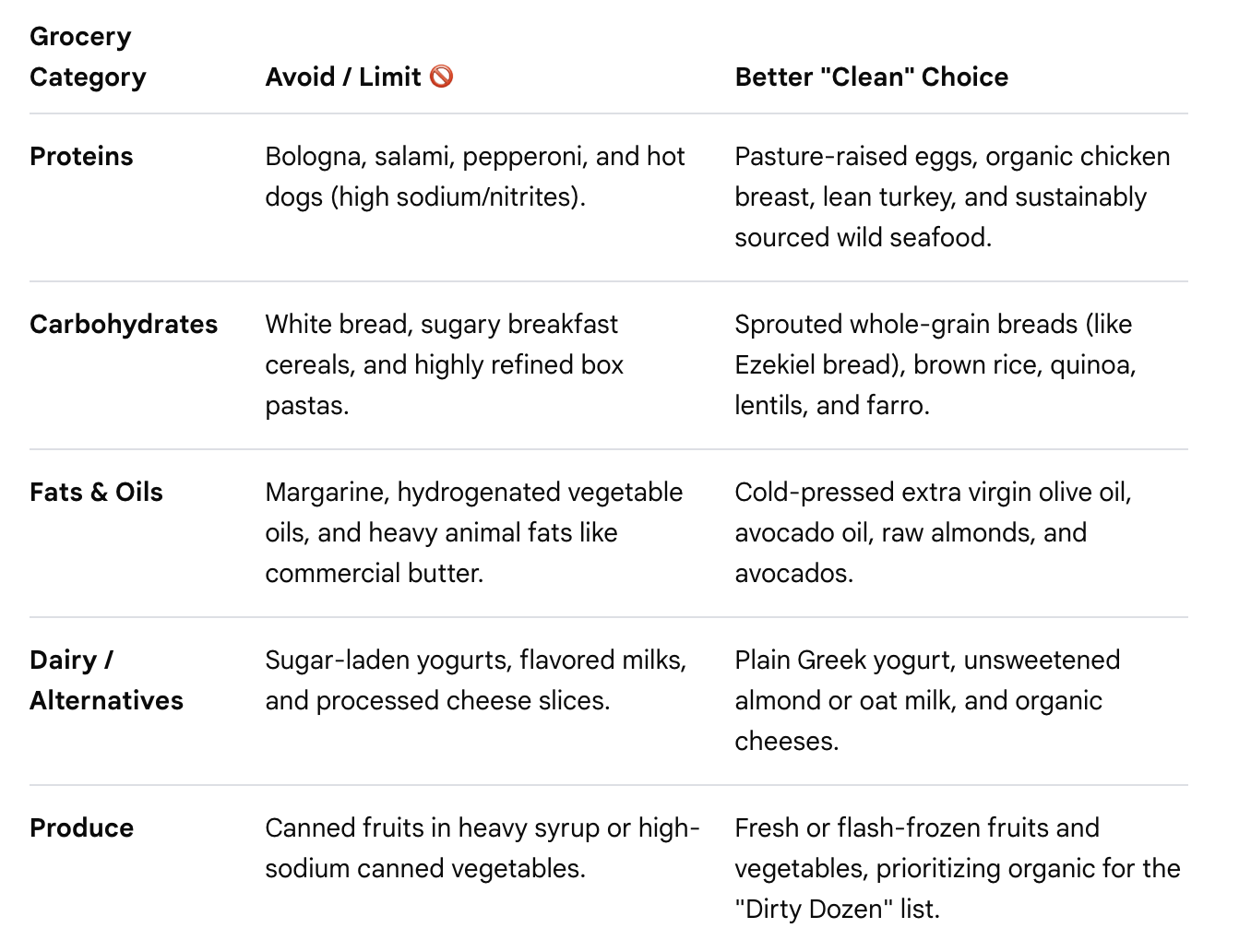
Making Better Choices at the Grocery Store
Navigating the grocery store requires shifting from marketing buzzwords to reading actual labels. A good rule of thumb is to look for products with 10 ingredients or less—all of which should be easily recognizable.
A direct look at swapping standard processed items for cleaner alternatives can help guide your next shopping trip:
🚫 Why Certain Ingredients are Not "Clean"
When reading nutrition labels, the presence of certain man-made compounds signifies that a food has shifted from "whole" to "ultra-processed". Clean eating advocates avoid these ingredients due to how they are manufactured and their potential impact on the body:
Refined Sugars and High-Fructose Corn Syrup (HFCS): Unlike the natural sugars found in fruit, refined sugars add "empty calories" that spike blood sugar without providing vitamins or fiber. They are heavily linked to systemic inflammation and metabolic issues.
Artificial Sweeteners: Ingredients like aspartame, sucralose, and saccharin are chemically synthesized to mimic sugar. They are excluded from clean eating because they are entirely artificial and can negatively alter taste preferences and gut health.
Trans Fats and Hydrogenated Oils: These are liquid vegetable oils that have been chemically altered with hydrogen to make them shelf-stable solids. They are highly inflammatory and universally recognized as detrimental to cardiovascular health.
Chemical Preservatives and Artificial Dyes: Ingredients like sodium nitrites (found in cured meats), BHA/BHT, and artificial colors (like Red 40 or Yellow 5) are added strictly to prolong shelf life or make food look unnaturally vibrant. They represent the exact opposite of eating clean, unadulterated food.
The Bottom Line
Clean eating is not about deprivation, strict calorie counting, or achieving dietary perfection. Instead, it is a sustainable mindset shift focused on choosing whole, single-ingredient foods that nourish your body from the inside out. By prioritizing the perimeter of the grocery store, learning to decode nutrition labels, and minimizing your intake of chemically altered additives, you can easily cut through the marketing noise. Start small by making simple, nutrient-dense swaps each week—because eating clean is ultimately about fueling your life with real, unadulterated food.
References
What IS ”clean eating”? It's eating REAL food (Facebook Community)
Food Blogs to Family Meals: A Brief Evaluation of Nutrition (National Institutes of Health)
Clean eating and Instagram: purity, defilement, and the idealization of food (ResearchGate)
The Dirt on Clean Eating: A Cross-Sectional Analysis of Dietary Intake (ResearchGate)